

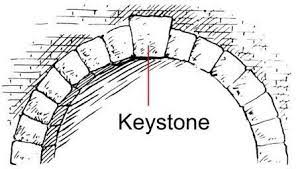
 As I have written before, a keystone is a wedge-shaped stone at the very top of an arch. It was the last piece to be placed in the construction and completes the curved structure. The other stones push against it and as a result the arch does not collapse. This is why it is key, earning its name and providing safety to all who pass below. Interestingly, it takes the least amount of stress of all the stones in the arch. Its primary purpose is not to bear the load above, but to receive the force coming from the adjacent stones.
A keystone is a species on which other species in an ecosystem largely depend, such that if it were removed the ecosystem would change drastically. For example, sea otters, whose diet of sea urchins prevents the elimination of kelp forests that the sea urchins feed on. Kelp covers a large portion of the planet’s coastlines, and supports a wide variety of fish, invertebrates, and marine mammals. With too many sea urchins the kelp disappears. Sea otters control the sea urchins, thus the otters are a keystone species holding an entire ecosystem in place.
Are you a keystone? Is there a family, an organization, a group of friends or colleagues, or even a movement that depends on you? What would happen if you disappeared? You might be tempted to think the world wouldn’t notice, or you would quickly be replaced. Don’t be so sure. Your connections form a unique constellation of relationships. Your nuanced interests, passions, and strong feelings influence this network.
What forces from your ecosystem are leaning on you and how might you put them to work this week?
“I believe fundamental honesty is the keystone of business.”
– Harvey S. Firestone